Early Doors: How the Pre-Club Pub Became the Best Room in the Building
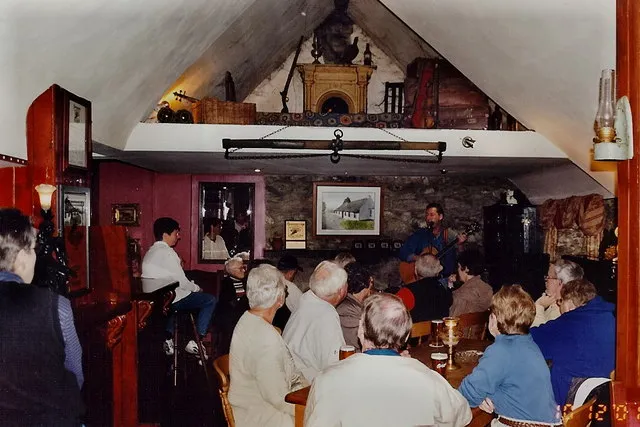
Photo: Joseph Mischyshyn, CC BY-SA 2.0, via Wikimedia Commons
It’s 7:42pm on a Friday in November, and the pub is already doing the thing. Not the frantic, coats-on, one-eye-on-the-door thing. The other thing: the slow build. A playlist that’s nudging 118bpm without anyone admitting it. A bowl of wasabi peas that has been refilled twice. A group by the window debating whether the club’s second room is ‘worth it’ with the seriousness of a select committee.
For years, the pre-club pub was a waiting room with a licence. You met, you had one, you checked your phone, you left. In 2026, it’s becoming something closer to a first act – programmed, paced and, crucially, treated as part of the night rather than the queue for it.
The holding pen opens its doors
Take The Beacon, a Victorian corner pub in Leeds that sits a seven-minute walk from three club nights with very different ideas about themselves. On Saturdays, the bar staff start the evening with low-slung disco and soul, then shift to warmer, harder-edged house around 9pm. The kitchen runs what it calls ‘pre-club plates’ – salt-and-pepper chips, a cheese toastie with a chilli crunch, a bowl of olives that costs less than a single mixer across town.
‘We’re not trying to be a club,’ says Maya, the assistant manager. ‘But we’re definitely part of the night now. People plan around us. They’ll ask what time we’re putting the music up, and what time we’re calling last orders, because they want the walk to the club to land at the right moment.’
That last bit is the tell. Last orders used to be an inconvenience. Now it’s a handshake. A few pubs have started timing it deliberately – not to push people out, but to release them into the night at the right temperature. One Bristol landlord told me he’d rather send a happy room down the road at 10:15 than a restless one at 11.
Landlords as uncredited programmers
In Stokes Croft, The Croft runs a ‘warm-up menu’ on Fridays: small plates, low-ABV cocktails, and a playlist built by a local DJ who also plays the club two doors down. In Glasgow’s Finnieston, The Bellweather has a standing arrangement with a nearby promoter: the pub gets a stack of flyers and a shout-out, the club gets a room that arrives together rather than in dribs and drabs.
‘It’s not a formal partnership,’ says Callum, who manages The Bellweather. ‘It’s more like we’ve admitted we’re on the same night out. We’ll text the promoter if it’s rammed and they’ll hold the door a bit. They’ll text us if the club’s filling early and we’ll speed up a bit. It’s very Glasgow – informal, but it works.’
In Manchester’s Northern Quarter, the pattern is slightly different: pubs lean into conversation and low lighting until 9, then let the music creep up. One bar has a ‘no shots before nine’ policy that sounds prudish until you realise it’s a pacing mechanism. The night starts softer, lands better, and nobody wakes up wondering where the first two hours went.
A softer landing
The best argument for the promoted pre-club isn’t economic. It’s social. A pub is a lower-pressure room than a club: you can hear each other, you can sit down, you can leave without a production. For people who find the first hour of a club overwhelming – the cloakroom crush, the dark, the sudden volume – the warm-up pub is a landing strip.
It’s also more inclusive. Groups can mix ages, budgets and sobriety without anyone feeling like the odd one out. One regular in Bristol told me she stopped going to clubs entirely for a few years because the entry point felt too sharp. ‘Now I do the pub, and sometimes I go on, and sometimes I don’t,’ she says. ‘But I’m still part of the night. That sounds small. It isn’t.’
The last-orders handshake
The transition itself has become a ritual worth noticing. The pint glass down. The coat on. The group chat check. The walk – short, brisk, full of jokes – that turns a room into a crowd. Pubs that understand this don’t fight it. They lean into it: a final song that’s long enough to finish a conversation, a barman who says ‘go on then’ as you settle up, a door held open for the cold.
It’s not nostalgia for some mythical golden age of going out. It’s more practical than that. Britain’s nightlife is a ecosystem of rooms, and the pub is one of them. When it works, it doesn’t compete with the club. It sets the table.
So next time you’re in a pub at 8pm and the music is slightly better than it needs to be, look around. That’s not an accident. That’s the warm-up, finally getting its name on the poster.