The Empty Room Sounds Different: Britain’s Pre-Open Ritual, Revealed
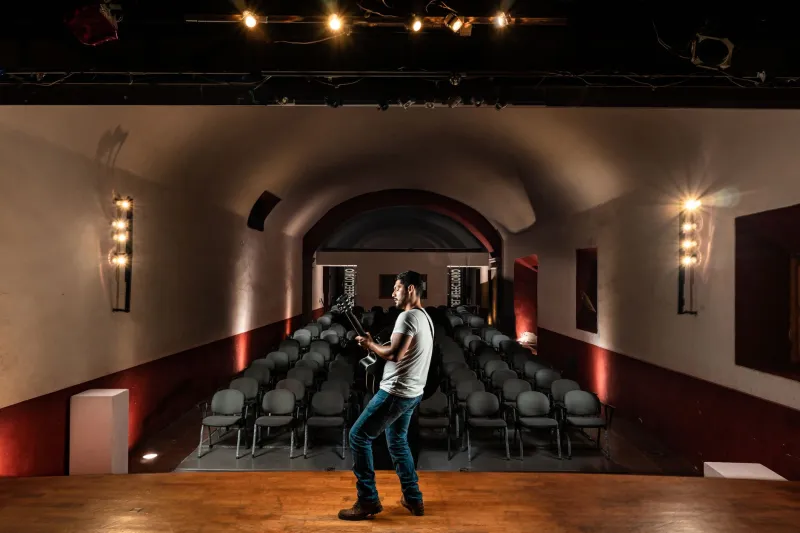
Doors at ten. That’s what the flyer says, and that’s what the queue believes. But the night has already been running for ninety minutes by then, just without an audience. Walk into a UK club before the first punter arrives and you’ll find a strange, sacred little window: half sound lab, half theatre warm-up, half domestic admin. Yes, three halves. That’s how it feels.
First, the bass has to learn the room
The sound engineer is usually the first person you’ll hear and the last person anyone thanks. They’re standing in the middle of an empty dancefloor with a tablet in one hand and a face like someone doing a crossword. They play the same eight bars over and over. It is not a tune. It is a test signal with delusions of grandeur.
Empty rooms are liars. A room with no bodies in it reflects sound differently, swallows some frequencies and flatters others. A room full of people is a giant dampener: coats, chatter, sweat, denim, the whole damp squib of humanity. So the engineer walks the floor, then the bar, then the smoking area, then the weird corner by the fire exit where the bass always pools. They’re not listening for the song. They’re listening for the bits between the song: the mud, the boom, the nasty little rattle in the ceiling that only shows up when the kick drum gets ideas.
In 2026, the gear is often lighter and cleverer than it used to be — tablets, apps, little boxes that do what a rack used to do — but the ritual hasn’t changed. Gaffer tape still fixes half of Britain’s nightlife. Someone still says, ‘Can you hear that?’ and everyone nods in a way that means maybe.
Ice, glass, and the choreography of the bar
Over at the bar, the personality of the club is already on display. Some rooms stack ice like they’re preparing for a siege. Some polish every glass and line up garnishes with the seriousness of a surgical theatre. Some just crack open the cans and get the card reader working. Neither is automatically better, but each tells you something. A club’s bar is its handshake. You can learn a lot from how it handles the first hour before it has anyone to impress.
Barbacks move through the room like they’re setting a stage. Crates down. Tills counted. Tonic stacked. The ice machine makes a noise like a small aircraft and someone says, ‘It’s always like this.’ The first staff playlist is on, usually something completely wrong for the night ahead — soft rock, R&B, a podcast someone forgot to pause — and it gives the empty room a lovely, unrehearsed quality. This is the club without its makeup on.
The door team sets the weather
The door team is where the pre-open ritual gets serious. Before the queue, before the guest list chaos, before the first person is told, very politely, that the night is sold out, there’s a briefing. Capacity. Ticket scanners. Allergies. A lost ID. A regular who needs a quiet word. The best door teams aren’t bouncers in the old cartoon sense; they’re weather forecasters. They decide whether the room will feel warm or wary, generous or gatekept.
A good door team reads the room before there is a room to read. They know the difference between nerves and trouble. They know that the first ten people through the door set the temperature for the next hundred. In 2026, with ticket apps and resale chaos and a queue that can curdle in seconds, that pre-open huddle is less about crowd control and more about tone control. Who’s working the scanner matters. Who’s smiling matters more.
Lighting is a mood, not a switch
The lighting tech runs cues on an empty floor, which is a bit like rehearsing a hug. Blinders flash. Haze drifts. The room goes black, then amber, then a deep blue that makes the empty coat rail look weirdly cinematic. Lights are honest in an empty club: too bright and you see the scuffs, too dark and you see nothing at all. The trick is building shadows that will flatter a crowd that hasn’t arrived yet.
Someone tests the mirror ball. Someone checks the strobe isn’t going to turn the front row into a medical incident. Someone says, ‘Can we lose the green?’ and everyone agrees. The empty room is a laboratory for atmosphere. By the time you walk in, it will feel effortless. It will not be.
The cleaner, the playlist, and the smell test
The last quiet act belongs to the cleaners, who are usually the only people in the building who treat the club like a building rather than a myth. Bins. Toilets. Floors. The smell of a club before it opens is cleaning product, cold air, and possibility. Later it will be perfume, sweat, and chips. Both are honest.
And then there’s the secret set no one paid for: the sound engineer’s playlist, still running through the system while staff drift in and out. For a few minutes, the club is just a room with good speakers and no expectations. Someone dances behind the bar. Someone checks their phone. Someone opens the fire exit for air. It is the least glamorous moment of the night and, somehow, the most revealing.
The first person in is never the first person in
When the doors finally open, the early arrivals think they’re seeing the beginning. They’re not. They’re seeing the end of a ritual that started with a bass test and a clipboard. The room has already been tuned, cleaned, briefed, lit and argued over. Its personality is set. You can feel it in the first ten minutes: whether the bar is relaxed, whether the door is kind, whether the sound is greedy or generous.
A club that respects its empty hour tends to respect you at 2am. So next time you’re in early — first in, coat still on, drink in hand, dancefloor suspiciously empty — listen for the ghost of the soundcheck. The room is still warming up. It just happens to be doing it with you in it now.