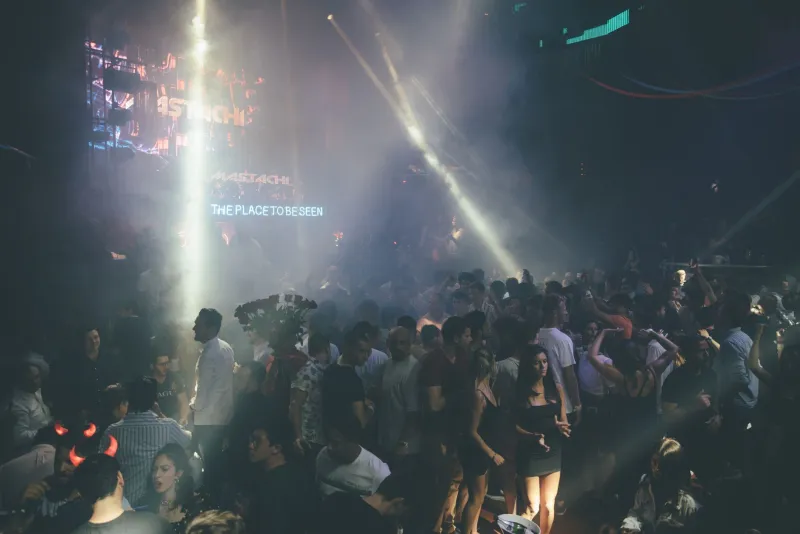
Nine O'Clock Sharp: Why the First Hour Is Becoming the Whole Night Out
Photo: Apostle Times, CC BY-SA 2.0, via Wikimedia Commons
Doors at nine used to be a soft opening, a way of saying the room hadn't finished being set up yet. In 2026 it's the pitch itself. Across Manchester, Bristol and Glasgow, promoters are dragging the night forward, killing the dead hour, and finding that the people who turn up first are the ones still standing when the lights come up.
The queue that starts before last orders
At a 400-capacity room a few streets back from Manchester's Oldham Street, the queue forms at twenty to nine. Not for the headliner. For the warm-up.
“Two years ago we opened at ten and the room was empty until half eleven,” says Priya Raval, who programmes the space. “Now we open at nine and the first hundred are in by quarter past. They're barely drinking. They're listening.”
That shift is doing a lot of quiet work. The opening set has been promoted from background music to something worth arriving for — a listening-bar hour with the lights half up, a live act before the DJ, a zine launch, a record stall in the back room. And the door price bends to match: a tenner before 10pm, sixteen after. Suddenly the first hour is the cheapest hour of the British week.
Warm-up as headline
“We book the opener like a headliner now,” says Dan Okonjo, who runs a monthly in Bristol's Old Market. “Same fee conversation, same soundcheck, same poster billing. If you put a name on the flyer at 9.30, people will come at 9.15.”
It helps that the early slot suits certain sounds better than a packed 1am floor does. Ambient, dub, jazz-adjacent selectors, anything with space in it — music that gets flattened when the room is a wall of bodies now gets a proper hearing. Glasgow promoters report the same: a Clyde-side venue running a nine o'clock listening session with seating out and the bar doing tea alongside the pints, filling a room that used to sit empty until the support act.
The economics of one extra hour
Venues are not doing this out of sentiment. An hour of trading is an hour of bar takings, and a crowd that arrives early tends to spend across the whole night rather than piling in at midnight and leaving at two. Door staff get a gentler curve too — a staggered arrival is easier to manage than four hundred people at once at half eleven.
“It's the difference between a shift and a stampede,” one Glasgow door steward tells us. “Nine o'clock you can actually talk to people. Ask them how they are. Do the job properly.”
Is this inclusivity, or just a different crowd?
Here's where the claims get tested. Early doors are often sold as an accessibility win, and they can be: cheaper entry, quieter rooms, a last train home that isn't a myth, an option for people who don't want to start their night at the hour their bus stops running.
But the early crowd is also, frankly, a different crowd — often older, often more local, often people who have something to be up for in the morning. Whether that's inclusivity or simply a second, parallel night out happening in the same room is a fair question. The honest answer from most promoters is: a bit of both, and we're still working out which.
Does it kill the 3am myth?
Only if you let it. The late night hasn't gone anywhere; it's just stopped being the only option on the menu. What's changing is the assumption that a proper night out can't begin until the pubs have turned out and the streets are wet.
“The myth was always a bit of a lie anyway,” Raval says. “The best bits of a night are usually early. You just weren't there for them.”
Nine o'clock sharp, then. Bring a coat you can dance in and a plan that ends before the first train, if you like. The night's got longer at the front end, and nobody's complaining.