One More Tune: What a UK Club's Final Song Says About the Night You Just Had

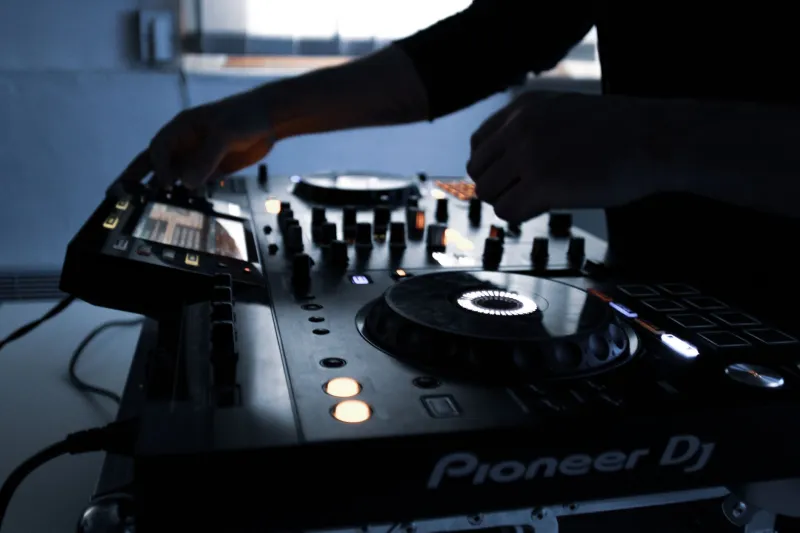
Photo: club closing lights up DJ booth crowd final song nightlife, via wallpaperaccess.com
You know the moment. The lights come up, the bar staff start stacking glasses, and the DJ has one record left to make sense of the last six hours. The final song of a club night is a strange little ritual. It can be a singalong, a reset button, a love letter or a polite instruction to leave. In 2026, as UK clubs fight for every penny and every punter, that last tune matters more than ever.
The song that says: you were here
'A good closing track does not just end the night,' says Ravi, a DJ who has held residencies in London and Leeds. 'It tells the room what kind of night they just had. If I play something euphoric, people leave buzzing. If I play something weird, they leave talking. If I play the wrong thing, they just leave.'
Ravi keeps a shortlist of closers: one for a crowd that has been with him from the start, one for a crowd that arrived late and rowdy, and one for the nights when the room is half-empty and the staff are tired. 'You have to read the room one last time,' he says. 'It is the only moment where everyone is looking at you and nobody is dancing yet.'
The singalong finish
Some clubs go for the emotional knockout: a beloved anthem, a remix of something everyone knows, a song that turns the dancefloor into a choir. Promoters love it because it sends people out on a high. Door staff love it because it gives everyone a shared moment before the cold air hits.
Nadia, who runs a monthly night in Bristol, says she used to resist the obvious choice. 'I thought it was cheesy. Then I watched 400 people sing the same line at 3am and realised I was being a snob. The last song is not for the DJ's ego. It is for the room.'
The hard reset
Not every club wants a happy ending. Some close with a track that is deliberately abrasive, strange or stripped-back — a signal that the fantasy is over and the real world is waiting. 'We call it the bucket of cold water,' says Sam, a promoter in Manchester. 'It is not cruel. It is a courtesy. You want people to leave with a clear head, not wandering around looking for another party that does not exist.'
Door staff have a front-row seat for this. 'You can tell the closing song by the way people put their coats on,' says Big Sue, a veteran steward in Birmingham. 'If it is a slow one, they hug. If it is a fast one, they run. If it is a weird one, they stand there going, what was that?'
The politics of the last tune
There is also a practical side. Licensing, transport and staff hours all shape the final 15 minutes. A song that runs too long can mean overtime. A song that invites a second encore can mean trouble. The best closers are generous but firm: they give the crowd a proper ending without opening a door to another hour.
And then there is the identity question. A club that closes with glossy pop is saying something different from a club that closes with industrial noise. Neither is better. But the last song is a promise about what kind of place you are standing in. 'It is the last impression,' says Ravi. 'People remember the first track and the last track. Everything in the middle is a blur.'
Nominate the UK's most iconic last song
So we want to hear from you. What is the one song that has sent you home from a UK club feeling changed, wrecked, euphoric or just ready for a kebab? Is it a stone-cold anthem, a ridiculous curveball or a track that only makes sense at 4am? Send your nominations to Club Clio and we will round up the people's favourites later this year.
Because the last dance is never just about the music. It is about the walk to the cloakroom, the last look at the dancefloor, and the strange little promise you make to yourself that you will do it all again next weekend.