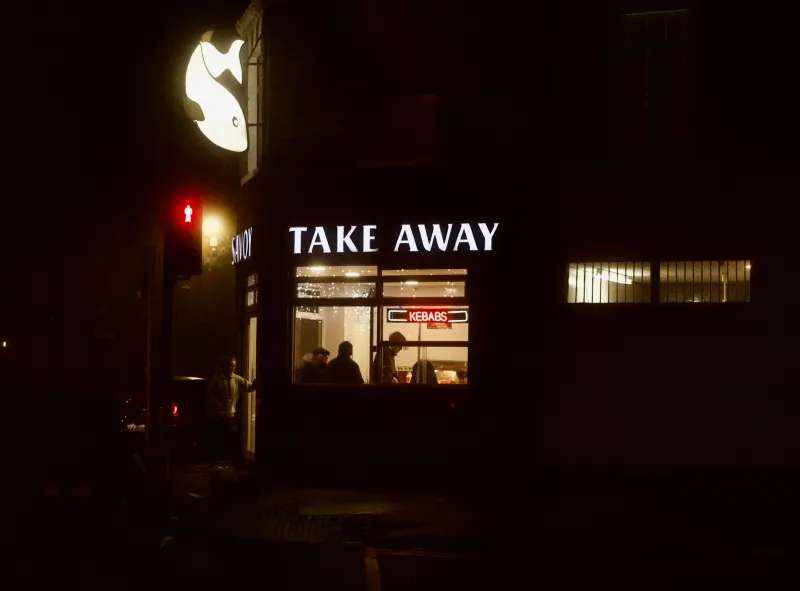
Before the Flash: The UK Club Photographers Who Read the Room First
Photo: W.carter, CC0, via Wikimedia Commons
The half-second before the flash
At 11:40pm in a Manchester basement, Nadia is not taking pictures. She is holding a small mirrorless camera against her chest, watching the far corner where the lights have not quite decided what colour they want to be. The DJ is still warming up. The room is half-full. A group near the bar is doing the awkward coat-and-drink shuffle. Nadia waits. Then she lifts the camera, takes one frame, and lowers it again before anyone has noticed.
'That was the shot,' she says later. 'Not the drop. Not the confetti. The bit before people remember they are out. That is when the room tells you what kind of night it is going to be.'
Nadia is one of a growing number of club photographers across the UK who work less like party paparazzi and more like quiet room-readers. They are hired by promoters, venues and occasionally by the DJs themselves. They shoot in Bristol cellars, Glasgow warehouses, London side rooms and Leeds back rooms. And in 2026, as phone cameras get better and the pressure to make a night look as good online as it felt in the room gets louder, their job has become stranger, more delicate and more important.
Consent is part of the craft
The first thing most club photographers talk about is not lighting or lenses. It is permission. In 2026, the flash is a negotiation. Some nights use wristbands: green for yes, red for no. Others have signs at the door, stickers on the bar, or a simple rule printed on the flyer: ask first, shoot second. The good photographers build consent into the way they move. They catch an eye. They tilt the camera. They wait for a nod.
'You can tell a lot about a club by how it handles the camera,' says Femi, who shoots across South London and has a file on his laptop called 'rooms, not poses'. 'If the photographer is allowed to be a predator with a flash, the crowd learns to close up. If the photographer is part of the room, people relax. You get better pictures. You also get a better night.'
Phone cameras have changed the equation. Everyone is a photographer now, which means the professional has to be something else: a witness with manners. Several photographers mention shooting more hands, shoes, backs of heads and over-the-shoulder frames. Not because faces are banned, but because the best picture of a night out is often the one that leaves something to the imagination. 'I want the contact sheet to feel like the room felt,' says Femi. 'Not like a catalogue.'
The contact sheet as club biography
Promo shots lie. They have to. They are taken early, lit properly and designed to make a Tuesday look like a Saturday. Contact sheets are different. They show the cloakroom queue at 12:15am. The smoker's huddle by the fire exit. The two people having a serious conversation next to the speaker. The girl who has lost her friend and is not yet worried. The boy who has found his friend and is slightly too worried.
In Bristol, a photographer called Rosa keeps every drive from every night she has shot since 2019. She calls it 'the outtake archive'. Promoters rarely ask for the outtakes. But Rosa has noticed that the pictures people respond to most are rarely the ones with the biggest smiles. They are the ones that look like a room breathing. 'A club's real character is in the frames nobody commissioned,' she says. 'The way people stand. The way they guard their drinks. The way the lights catch the sweat on the ceiling. You cannot fake that with a wide-angle lens and a shout.'
This is why contact sheets are becoming an unofficial archive of British nightlife. Not the polished aftermovie. Not the artist repost. The messy, half-lit, slightly out-of-focus evidence that a room full of strangers decided to trust each other for a few hours. In 2026, with so many small venues under pressure and so much nightlife existing only as a story we tell online, that archive matters more than ever.
The pressure to perform
Photographers feel the content treadmill. Promoters want images by morning. DJs want clips for their stories. The venue wants proof the night happened. And somewhere in all that, the room wants to be left alone. The best photographers in the UK are learning to hold both things at once: to deliver something useful without turning the dancefloor into a shoot.
Some clubs are pushing back with what one Glasgow photographer calls 'anti-promo' photography: grain, motion blur, faces turned away, flash used sparingly. The pictures look less like advertising and more like memory. They are harder to sell. They are also more honest. 'If the room is dead, no flash fixes it,' says the Glasgow photographer. 'And if the room is alive, you do not need much. You just need to be paying attention.'
What they see before the dancefloor does
Ask a club photographer what they notice first and you get a masterclass in reading a night. The queue outside: who is nervous, who is performing, who is already having the best time. The first twenty minutes inside: who is holding the group together, who is scanning for an exit, who has claimed the booth. The 1am shift: who is still dancing, who is pretending, who is about to leave without saying goodbye.
They see the night's shape before the dancefloor does. That is the quiet skill. It is also why their pictures are a better guide to a club's character than any promo shot. A room that looks after its quiet people. A room that lets the photographer work without turning it into a spectacle. A room where the flash feels like a question rather than an accusation. You can see all of it in the contact sheet, if you know where to look.
Next time you are out, and the photographer drifts past with the camera low, let them. They are not there to make you look famous. They are there to catch the half-second before the room becomes itself. And if you want to know what a club is really like, ask them what they saw before the flash.