No Camera, No Alibi: The New Etiquette of Britain’s Phone-Free Dancefloors
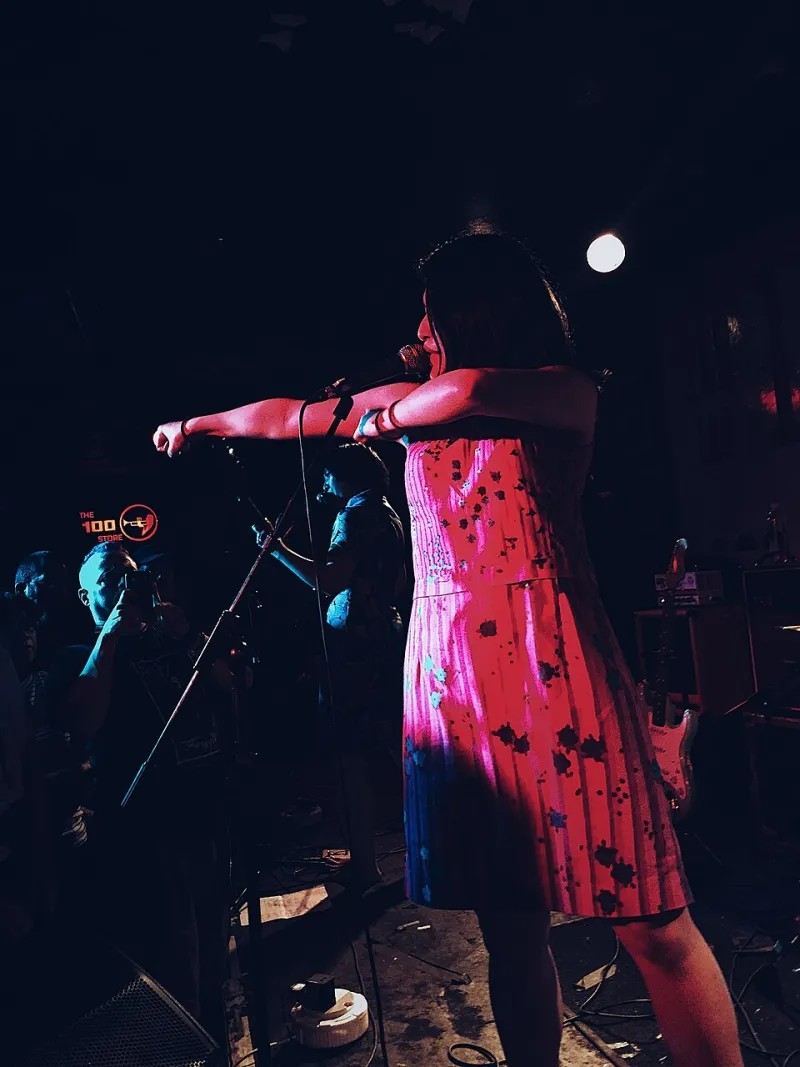
Photo: p_a_h, CC BY 2.0, via Wikimedia Commons
The first thing you surrender at a phone-free club night isn’t your phone. It’s the little story you were planning to tell about it. You know the one: the perfectly lit booth, the mate mid-laugh, the DJ’s hands in the air. At a growing number of UK nights in 2026, that story stays in your pocket — or, more accurately, in a locked pouch by the door.
This isn’t a moral panic about screens, and it isn’t quite a wellness retreat with a bassline. It’s a practical, faintly awkward social experiment happening at doors from Peckham to Glasgow. Some promoters sticker over the lens. Some hand you a Yondr-style pouch. A few ask you to hand the thing in altogether, like a tiny, expensive coat. The result is the same: for a few hours, the room is not a content opportunity. It’s just a room.
The Pouch, the Sticker and the Polite Standoff
Stand by a phone-free door for twenty minutes and you’ll hear the full range of human bargaining. There’s the cheerful surrender. There’s the suspicious squint. There’s the classic ‘but I’m meeting people later’ — as if the door team has never heard that one. And there’s the quiet panic of someone who has just realised their entire night out is organised in a group chat they can no longer see.
Door teams have become part phone librarian, part diplomat, part bouncer of the thumb. The best ones don’t lecture. They explain the rule, offer the pouch, and crack a joke about how the cloakroom has been doing this with coats for decades. The worst ones treat a mobile like contraband, which immediately makes everyone feel twelve years old.
A sticker over the camera is the light-touch version. It says: keep it, but don’t make the night into a broadcast. A pouch is firmer — you can still feel the buzz, but you can’t answer it without a small act of rebellion. Handing it in is the full monastic option, and it tends to work best in smaller rooms where the cloakroom queue is short and the promise of getting it back is genuinely quick.
The door is where the ideology meets the queue. And the queue always wins.
Why 2026 Is the Year of the Empty Hand
Promoters aren’t doing this because they hate your Instagram. They’re doing it because the dancefloor has become one of the last rooms in Britain that can’t be screenshotted, and that scarcity has value. In a year when every other corner of life is optimised for capture, a dark, loud, slightly sticky room with no phone signal feels almost luxurious.
There’s also the practical stuff. Footage from clubs travels fast and rarely with context. A clip can make a night look packed when it was half-empty, or chaotic when it was just a bloke in a bucket hat having a lovely time. Promoters have spent the past few years learning that the content economy doesn’t always pay the electricity bill. A room full of people actually dancing does.
And then there’s the atmosphere argument, which is less about privacy and more about presence. When nobody is filming, nobody is performing for the camera. You can be bad at dancing in public without it becoming evidence. You can have a conversation that doesn’t end with someone saying ‘say that again, I want to film it’. You can be a little boring, a little messy, a little off-trend. That’s not a small thing.
The Floor Feels Different — Eventually
The first twenty minutes are strange. Your hand goes to your pocket like a phantom limb. You pat the space where the phone should be. You look around for a clock. You wonder if anyone has texted. You wonder if you have become the sort of person who wonders if anyone has texted.
Then the bass does its work. The room gets warmer. The stranger next to you says something you can’t quite hear, and you lean in instead of nodding vaguely at a screen. You notice the lights. You notice the way the crowd moves as one slightly wrong organism. You notice that you have been standing in the same spot for eleven minutes without checking anything.
It isn’t a religious experience. It’s just a night out with fewer interruptions. But in 2026, fewer interruptions is a genuine novelty.
The trade-off is memory. Without footage, the night becomes slightly unverifiable. You’ll wake up with a song in your head and no idea who played it. You’ll try to describe the lighting to a friend and fail. You’ll have to trust your own recollection, which is a bit like trusting a weather forecast from a pub landlord. And yet the stories get better. The night gets taller in the retelling. Word of mouth comes back, not because it’s purer, but because it’s the only option.
New Rules, Same Old Social Anxiety
A phone-free dancefloor doesn’t erase etiquette. It just moves it somewhere else. The smoking area becomes the new group chat. The cloakroom queue becomes the new scrolling session. People still find ways to avoid eye contact; they just do it with a pint instead of a screen.
There’s also a new kind of low-level policing. The person who reminds you of the rule. The person who tells you off for having a phone-shaped bulge in your pocket. The person who treats a phone-free night like a personality test. Promoters have to be clear: this is a room rule, not a moral upgrade. You are not a better person because you left your phone in a pouch. You are just a person in a room.
And the rule doesn’t work for everyone. Some people need their phone for caring responsibilities, health reasons or safety. The best phone-free nights build in exceptions without making anyone feel like a problem. A clear sign at the door, a quiet word from staff, a designated spot to check messages — none of that ruins the vibe. It just makes the vibe available to more people.
The Morning After the Night Before
Promoters lose something when the phones go away: the free marketing, the tagged stories, the clip that does the rounds on a Sunday. What they gain is harder to measure. A better room. A longer attention span. A crowd that is slightly more likely to come back because they remember how it felt rather than how it looked.
For punters, the gain is simpler. You get a night that belongs to the people in it. You get to be a witness instead of a camera operator. You get to leave with a story that starts with ‘you had to be there’ and actually means it.
That’s not a revolution. It’s a small, deliberate choice — one that says the dancefloor is worth protecting from the scroll. In 2026, with everything else asking for your eyes, a room that asks you to put them back on the crowd feels almost radical. Pockets down. Eyes up. The night is happening right in front of you.