The Platform Is the Last Room: Britain’s Night Out Ends at the Timetable
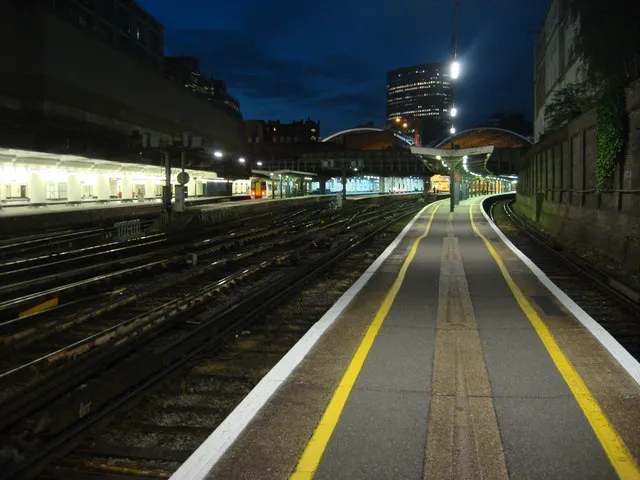
Photo: Oxyman, CC BY-SA 2.0, via Wikimedia Commons
At 23:47 on a Friday, a platform in Manchester becomes the most honest room in the city. The bass from the club is still in your ribs, but the conversation has changed. No one is talking about the next venue. Everyone is doing timetable maths. The last train is not an exit from the night. It is the night’s final room, and it has been calling time on British clubbing for longer than any bouncer.
The quiet lever behind the night
Ask a promoter what shapes a night and they will talk about line-ups, sound systems and door policy. Ask them again after midnight and they will talk about the last service. A 00:12 departure from Manchester Victoria does not just move people; it moves the peak. DJs learn to place their biggest stretch 90 minutes before the platform call. Clubbers learn to check the train before they check the set times. Station staff learn to read the crowd by the shoes.
The last train is a social contract with a timetable attached. It decides who stays for one more tune and who is already mentally in the taxi queue. It turns a crowd into a countdown. And in 2026, with night-time economies still arguing for later services and operators juggling engineering works, that countdown is as practical as it is emotional.
Manchester: Victoria’s quiet shrug
Manchester does not have one last train. It has a constellation of them, and each one pulls a different crowd. Victoria empties towards Rochdale, Bolton and Wigan. Piccadilly sends people south and east. The Metrolink adds another layer, with late trams on some nights and a very different atmosphere from the rail platform.
A promoter in the city tells me the last tram is often the real deadline, not the last train. “People will stay for a 2am finish if they know there is a tram,” they say. “If not, the room starts thinning at half eleven.” That thinning is not failure. It is choreography. The best nights plan for it: a final hour that rewards the people who can stay and sends the rest home with a good last song rather than a frantic search for a cab.
Glasgow: the Subway curfew
Glasgow’s night has a different clock. The Subway’s early finish is a known character in the city’s nightlife — a circular reminder that the party has edges. Clubbers around the Circle learn to treat the last Subway like a curtain call. Miss it and you are in taxi territory, which is its own sport.
Station staff see the same ritual in different clothes: the last-minute dash, the friend who insists there is time, the group split between the ones who leave and the ones who double down. It is not romantic to miss the last train. But it is very Glasgow to make the sprint part of the story.
Bristol: Temple Meads and the long goodbye
Bristol’s last trains leave a city that likes to take its time. Temple Meads is not a club, but after midnight it has the same social physics: small groups forming, phone torches waving, someone announcing a platform change like a bad remix. The walk to the station is the afterparty no one booked.
For promoters, the calculation is brutal and creative. If the last service is early, the night has to peak earlier. If there is a rail replacement bus, the night has to end with a group decision. Bristol’s crowd is good at this. The city has a long history of making do, making noise and making the walk home part of the plan.
London: the Night Tube and the illusion of endless night
London is the great exception and the great trap. The Night Tube makes Friday and Saturday feel infinite on some lines, but not all of them. The Victoria line can feel like a moving afterparty; the last Overground train can feel like a fire drill. Clubbers who live off the Night Tube map learn the difference quickly.
A station supervisor in south London tells me the platform is where the night “gets honest”. People who have been performing energy for six hours suddenly become commuters. Someone shares a bag of chips. Someone else asks if the service is running to their stop. The answer decides whether the night ends with a laugh or a long, expensive sigh.
2026 quirks worth knowing
The practical stuff matters more than ever this year. Check the operator’s app before you leave the house, not when you are outside the club with 12% battery. Friday and Saturday timetables are not the same as Sunday’s. Engineering works can turn a simple route into a rail replacement saga. Contactless caps and travelcards still reward a bit of planning. And if a promoter says the venue is “near the station”, ask which station and which last train.
The 2026 quirk is not a single timetable change. It is the mood: night-time transport is being debated, trialled and argued over, while clubbers keep doing what they always do — building a night around the last train and pretending it was the plan all along.
The sprint is the ritual
The platform sprint is not glamorous. It is a bag bouncing, a friend shouting, a ticket gate beeping, a train door holding for no one. But it is also a shared ritual. The last train creates a temporary community of people who have all decided that the night is worth one final run.
So when you see the departure board flick to a platform, do not think of it as the end. Think of it as the last room of the night: bright, brutal, weirdly tender, and always on time. The 23:47 rule is simple. The night belongs to the dancefloor, but the timetable writes the closing speech.