Salt, Steam and Streetlight: Britain’s Real Afterparty Comes in a Paper Bag
The bass has stopped. The cloakroom queue has dissolved. Your ears are still ringing in that soft, cotton-wool way, and the taxi app is telling you six minutes that will somehow last twenty. This is the moment the night usually falls apart — not dramatically, just quietly, somewhere between the smoking area and the bus stop.
Except there’s a light on at the end of the street. A bakery window, maybe, or the bright white hum of a convenience store. A pasty counter. A chiller cabinet. A paper bag. And suddenly the afterparty has a venue again.
The window as a landing strip
There is a particular kind of British magic to a shop that stays open when the clubs empty out. It isn’t glamorous. Nobody is booking a DJ. But the lit window does something crucial: it gives the night a soft place to land. You go in with your coat still smelling of someone else’s perfume and your feet sending up complaints, and you stand in a queue that moves at the speed of a night bus.
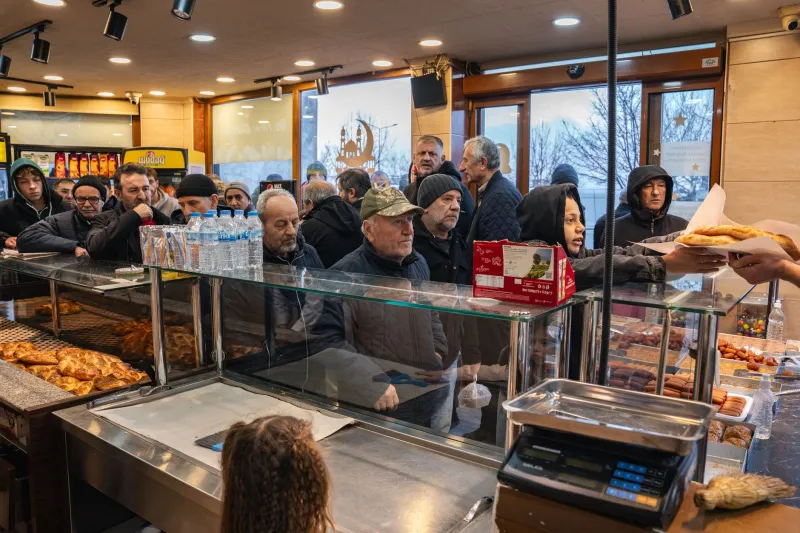
The bakery is especially good at this. The shelves are half-empty, the staff are efficient in a way that suggests they have seen everything, and the air is thick with warm dough and floor cleaner. It is not a romantic room. It is a decompression chamber. Clubbers, taxi drivers, hospital workers coming off shift, the person who has been designated to get everyone home — they all end up in the same queue, buying the same sort of thing.
The order is a personality test
Ask a room full of clubbers what they buy at 4am and you get a surprisingly accurate map of who they are. There’s the steak bake loyalist, the cheese-and-onion traditionalist, the person who insists they only want water and then eats half a sausage roll. There’s the meal-deal strategist, building a tiny picnic on a low wall. There’s the one who buys a bag of crisps and a banana and calls it balance.
A night-shift baker in Leeds tells me the orders shift through the night. Earlier on, it’s still a bit performative — people buying what they think a night out looks like. By 4am, the performance is gone. ‘They just want something warm and quick,’ she says. ‘Nobody’s pretending. That’s the nice bit.’
The paper bag becomes part of the ritual. It’s warm in your hand. It rustles against your coat. You carry it like a tiny trophy, and somehow the walk to the taxi rank feels shorter because of it.
Bakers, bouncers and the 4am handover
There’s an unofficial handover that happens between the club and the bakery. Bouncers become ordinary people in coats. Taxi drivers stop being traffic and start being characters. A driver in Manchester tells me he can tell how the night went by what people are carrying. ‘If they come out with a bag and they’re laughing, it was a good one,’ he says. ‘If they come out with nothing and they’re walking fast, they’re done.’
The bakery staff are the calm centre of it all. They are not there to host your afterparty. They are there to sell you a bake and get you out of the doorway. But that briskness is part of the comfort. Nobody is asking you to be interesting at 4am. Nobody needs your best story. The transaction is beautifully simple: you point, they bag, you say thanks.
A paper bag is a social equaliser
Clubs can be hierarchical places — guest lists, booths, the right trainers, the right name. The bakery queue does not care. A promoter and a first-year student can stand next to each other waiting for the same cheese twist. The lighting is unflattering for everyone. The music is whatever the shop radio is playing, usually something deeply ordinary.
That’s the secret appeal. The after-club bakery is not trying to be a vibe. It’s a pause button. You can stand there with your smudged eyeliner and your half-finished sentence and nobody is going to ask you to sum up the night. You can just be another person holding a warm bag, waiting for the cold air to wake you up enough to get home.
The rules of the run
There are a few unwritten rules. Don’t buy the last of anything if there’s a queue behind you. Don’t have the full group debrief in the doorway. If you’re getting a taxi, decide before you get to the rank. And always check the bag before you walk off — there is a special kind of tragedy in getting home to find someone else’s cheese and onion has replaced your steak bake.
The best nights don’t always end with a sunrise. Sometimes they end with a paper bag, a warm pasty, and a taxi driver who has heard your entire conversation and is politely pretending he hasn’t. It’s not the headline act. But ask anyone who has stood in that queue at 4am: it’s the bit that makes the night feel finished.