The Long Shift: Why Britain’s Best DJs Are the Ones You Can’t Google

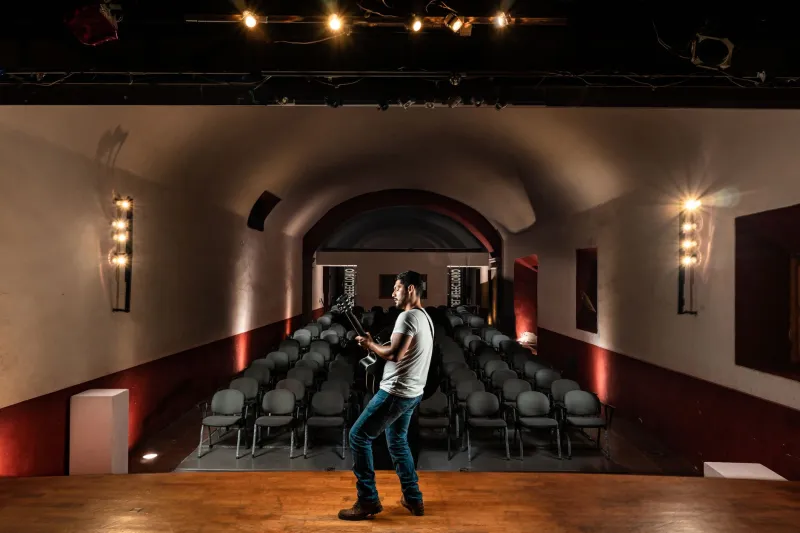
Photo: resident DJ behind decks in small UK club room, crowd dancing, warm low light, via i.etsystatic.com
There’s a moment, usually somewhere between half one and two, when a room quietly decides whether it trusts the person behind the decks. No announcement. No drop. No pyrotechnics. Just a few hundred people realising at roughly the same second that they are in safe hands and can stop checking their phones.
That moment almost always belongs to a resident.
The Small Print That Runs the Night
Look at any club flyer in Britain this autumn and the hierarchy is obvious. Headline name in enormous caps. Guest in bold. Then, tucked between the door times and the QR code, in a point size you could read from space, the resident. Sometimes a first name only. Sometimes a nickname that means nothing unless you have been going since the room opened.
And yet the resident is the one who knows the left speaker rattles during the third hour. The one who knows the bar staff by name, knows the cloakroom queue peaks at 1:20, knows the exact minute the smoking area empties and refills. They are the room’s memory — its archive, its insurance policy and, increasingly, its whole personality.
A Contract With Two Signatures
People talk about residencies as if they were jobs. They are closer to relationships, and slightly awkward ones at that. The DJ agrees to show up, read the room and put the night before their own record bag. The dancefloor agrees to trust them, forgive them a duff selection, and come back next month anyway.
Nadia has held a Saturday residency at a 250-cap room on the edge of Leeds city centre since 2019. She describes the job in terms of chores rather than glory. ‘The first hour is a favour to the door staff. The last hour is a favour to the cleaners. Everything in between is mine.’ She has a running note on her phone of things that worked: a certain B-side that saves a flagging floor in November, a two-track run that reliably gets the smoking area back inside.
Otis does a monthly Friday in a Stokes Croft basement in Bristol, a room so warm that the walls sweat by midnight. His residency is built on what he calls ‘the drift’ — the way a crowd migrates from the bar to the front and back again. ‘You learn the geography,’ he says. ‘You can see a room get bored before it hears itself get bored.’
In Glasgow, a resident the regulars only ever call Fee has spent six years in a 180-cap room off the Trongate, and describes her job as ‘shutting up’. Her best sets, she reckons, are the ones where nobody notices her at all. ‘If they’re talking to each other and dancing badly, I’ve done it. If they’re watching me, I’ve probably overplayed.’
Reading the Room Is Not a Vibe
There’s a lazy idea that reading a crowd is some mystical gift, handed out at birth alongside perfect pitch. It isn’t. It’s admin.
Residents track small numbers all night. How long the queue at the bar is. Whether the front-left corner has filled or whether it’s doing that thing where one enthusiastic man dances alone in a two-metre exclusion zone. Whether people are dancing with their eyes closed, which usually means yes, or dancing while looking at the exit, which usually means no.
Jae, who runs a Sunday night in Manchester’s Northern Quarter, puts it bluntly: ‘Nobody ever asks me what I played. They ask me if it was good. That’s the whole job. Good is a service, not a genre.’
There’s also a diplomatic side. A resident is the person who has to tell a headline guest that the room empties earlier than they think, or that the 140 stretch they’ve planned will land badly on a crowd three pints deep and 90 minutes from the last train. It is a job of soft corrections, offered quietly, usually accepted, occasionally ignored — and then absorbed, gracefully, when the floor clears.
The resident is the only person in the building whose set starts before the crowd and ends after it.
Why 2026 Tilts the Balance
The economics of a British night out have pushed the resident towards the centre of the picture. Headline fees travel. Flights, hotels, riders, the cost of getting a big name from one city to another on a Saturday — all of it lands on the ticket price, and ticket prices have a ceiling now. Rooms have responded by investing in the thing that doesn’t need a train: the person who is already there.
At the same time, the small-room boom has changed what a good night looks like. Two-hundred-capacity rooms don’t sell on names, because they can’t afford to. They sell on consistency. They sell on the feeling that the same person will be there next month, doing roughly the right thing, in a room where you know where to stand. That is a residency, whether or not anyone puts it on the poster.
And the pre-midnight shift matters here too. As more of us arrive early and leave before the lights, the resident — the one who plays the first two hours, not the last forty minutes — becomes the person most people actually hear the most of. Quietly, the small print has become the main event.
How to Spot a Good One
They play to the room, not to the recording. If you could paste the set onto a festival stage unchanged, something is off.
They don’t clear a floor to make a point. A resident will always choose the room over the record. Ego is for guest slots.
They know the building. Watch who the door staff nod at. Watch who the bar backs chat to over the till.
They end on time. Not early, not late. On time — because somebody has a bus replacement service to catch and somebody else has to clean up.
The Name You Learn by Accident
Nobody goes out for a resident. You go out for a night, and you come home having learned a name you didn’t know you were looking for. Then you see it in the small print a month later and feel an odd little flare of recognition, like spotting a friend’s handwriting on an envelope.
That’s the whole trick of it. A headline gives you a reason to buy a ticket. A resident gives you a reason to come back — and in 2026, with money tight and nights short, coming back is the only review that really counts.