Cotton Receipts: The Night Out You Can Fold Up and Take Home
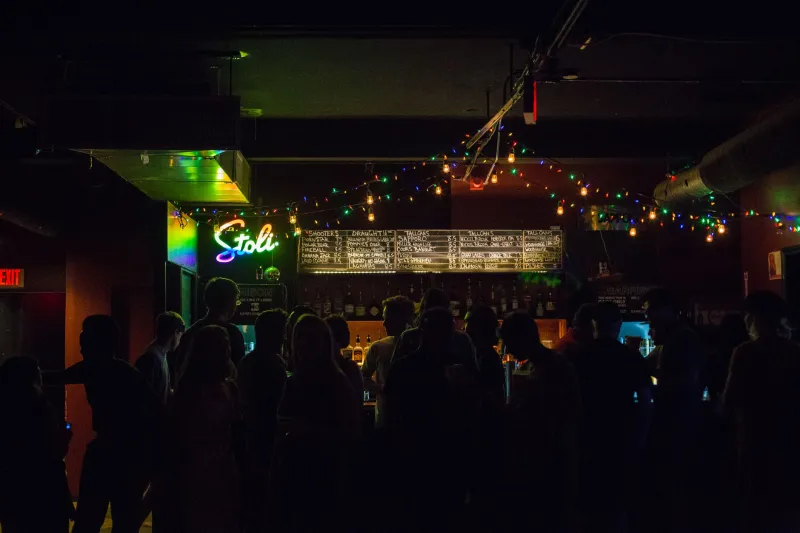
At 1:07am, somewhere between the bar queue and the smoking area, a small lamp clicks on over a folding table. There is a stack of T-shirts, a roll of posters, a biscuit tin of pin badges and a person with a card reader trying to look relaxed. Nobody is dancing near it. Nobody wants to leave it. This is the club merch table, and in 2026 it has quietly become one of the best rooms in the building.
Not a shop. Not quite a stall. More like a pause button. You come over to escape the crush, stay for the print, and leave with cotton in your bag and a new person's number because you both agreed the mustard version was better. The souvenir is the excuse.
The table is a room within a room
For years, merch belonged to bands. You bought a tee to prove you saw a tour, not a night. But as tickets turned into QR codes and flyers became keepsakes, clubs started making objects again. A shirt with the room's name. A poster with a date on it. A tote bag that says less about shopping and more about where you were at 2am. The merch table gives a night a physical edge: proof that it happened, and that you were in the room when it did.
It also helps pay for the room. Margins in UK nightlife are thin enough to see through. A run of fifty tees can cover a sound engineer, a repair, a van. One Bristol promoter puts it plainly: 'We used to sell tickets to pay for the night. Now we sell the night back in cotton.' It is not charity and it is not a merch grab. It is a small, direct line between the person on the dancefloor and the person fixing the monitor.
Why the 1am drop works
The timing is the trick. Before midnight, the table feels like a shop and everyone is too sober to commit. After 2am, it feels like a lost property desk and everyone is too messy to find their wallet. But around 1am, the room has decided it is staying and has not yet admitted it is leaving. That is when people get sentimental. That is when a stranger tells you the shirt will shrink, and you believe them.
There is an etiquette to it. Read the table before you join the queue. Ask the person behind it about fit, not your mate. Do not unroll every poster on the dancefloor. Do not haggle; this is not a car boot. If your size has gone, ask about a restock online, not a miracle at 1:20am. Buy the one that makes you grin. And if you cannot afford it, say so and step aside. The table is not a paywall, and the night is not a test.
The hand-pulled charm
What makes 2026 merch different is that so much of it is made close to the room. Screen-printers in railway arches, venue staff designing at 4pm, small runs of thirty or fifty. Slight misprints are part of the charm. A wonky edge says a human pulled the squeegee. A perfect print can feel like a supermarket. The best club tees smell faintly of ink and look like they were made for the night rather than for an algorithm.
That is why the night-specific drop has taken hold: fifty shirts, numbered, dated, gone by the next week. It is slow fashion in a fast room. You are not buying a souvenir from a gift shop. You are buying a piece of the room's own handwriting.
A short field guide to tables worth queueing for
Stock rotates, so check ahead. But these are the tables that tend to earn their place by the cloakroom.
- Fabric, London: classic room, classic logo, and a queue that moves faster than you think after 1am. Buy before the final set, not after.
- Sub Club, Glasgow: the merch feels like a password. A small tee, a big history, and a table that rewards a quiet word rather than a scrum.
- Brudenell Social Club, Leeds: tote bags, posters and the peculiar joy of buying a club-night souvenir in a room that also hosts weddings and quizzes.
- The White Hotel, Salford: unpredictable prints for unpredictable nights. If you see a poster you like, buy it. Do not stroke it.
- Corsica Studios, London: hand-printed runs tied to specific nights. The table is often near the entrance, so buy early or spend the night carrying a tote like a small dog.
The shirt after the night
A club tee is a receipt you can wear. It starts conversations on trains, in corner shops and at brunch. It says: this room was good, this night happened, these people were there. In an age of algorithmic recommendations, a shirt is a human one. It is a nudge to go back, to look up the next date, to trust the room.
Wash it cold, inside out, and do not iron the print. Wear it the next day with the slightly smug look of someone who has been out and survived. The night ends. The cotton does not. Some souvenirs sit in drawers. This one goes back out into the world.
At 1:20am, the table packs up. You leave with a shirt that still smells of screen ink and smoke. The dancefloor is still going. You have already taken a bit of it home.