Thirteen Amps and a Social Contract: Dispatches From the Club Socket Front Line
Every club has a centre of gravity. It is rarely the DJ booth. On a Saturday in 2026, it is more likely to be a scuffed white square on the wall behind a banquette, maybe two feet from a sticky table and one careful stride from a fire exit. It is the plug socket. And it is having a moment.
You can tell a lot about a night out by how people treat a socket. In a room where the bar is cashless, the tickets are digital and the taxi home lives in an app, 1% battery is not a minor inconvenience. It is a countdown clock. One red icon can mean missing the last train, losing the group chat or standing outside at 2am trying to remember your own address. The humble 13-amp wall socket has become the least glamorous and most contested piece of infrastructure in British nightlife.
The geography of a good socket
Venue managers think about this more than you might imagine. A socket in the wrong place is a trip hazard, a fight waiting to happen or a phone left behind at closing. A socket in the right place is a quiet amenity that keeps people in the room for one more drink.
The ideal spot, according to one venue manager in Leeds, is ‘visible, reachable, and not in the middle of a dancefloor’. That usually means near seating, close to a pillar or under a ledge, somewhere a person can crouch without becoming a dancefloor obstacle. The worst spots are the classics: behind a speaker stack, underneath a table that has been bolted to the floor, or next to a hand dryer in a toilet that sounds like a jet engine.
Door staff know the map too. Ask a bouncer where the plug sockets are and you will often get a look that says, ‘You’re the fifth person tonight.’ Then they will point. The good socket. The one by the cloakroom. The one behind the till that the bar staff guard like a secret. The one in the smoking area that has become an informal charging station, complete with a tangled extension lead and a small pile of phones balanced on a ledge like a low-budget shrine.
Campers, guardians and the 1% club
There are types. You will meet them all.
The Camper arrives early, claims the seat nearest the socket and arranges their belongings with the quiet confidence of someone who has done this before. Their cable is long. Their bag is on the floor. They are not moving.
The Guardian is not charging anything. They are simply sitting near the socket, keeping an eye on it, perhaps for a friend. They have become the socket’s unofficial custodian and will politely explain that the lead is in use.
The Borrower is the most common. They approach with the universal expression of the 1% club: phone in hand, screen turned towards you, red battery icon glowing like a tiny distress flare. They ask. They are always apologetic. They have usually just realised they cannot get into their bank app to pay for the taxi.
And then there is the Power-Bank Prepper, who carries a 20,000mAh brick in their jacket and regards the wall socket as a backup, not a lifeline. They are smug, but useful. If you are lucky, they will hand you a cable and a look of quiet superiority.
The etiquette is the amenity
The unwritten rules of the club socket are simple, but they are not universal. Ask first. Do not unplug someone else’s phone unless you can see the screen is on and they are nowhere to be found. Do not leave your phone overnight. Do not use the socket as a coat hook. Do not stretch a cable across a walkway and then act surprised when someone kicks it.
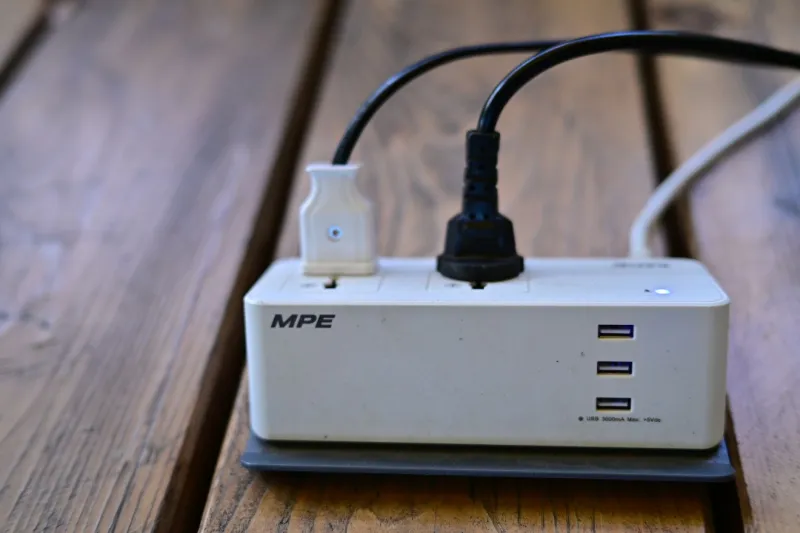
Most importantly: share. A four-way extension lead in a club is a small act of civilisation. It turns one socket into four, and four sockets into a little charging commune. People swap cables. They watch each other’s phones. They talk. Not in a big, theatrical way, but in the way that happens when you are standing still in a loud room and you have nothing to do but wait for a battery to climb from 4% to 8%.
One door supervisor in Bristol tells me he has seen more arguments over sockets than over taxis. ‘Not proper fights,’ he says. ‘Just the look. The sigh. The passive-aggressive cable move.’ But he has also seen the other side: strangers offering chargers, bar staff plugging a phone in behind the till, someone saying, ‘Go on then, plug it in,’ and shuffling along the bench to make room.
Design faults and quiet fixes
Newer venues are catching on. USB ports built into seating. Lockers with charging cables. Power-bank vending machines near the cloakroom. One Glasgow venue has started lending out small battery packs against a deposit, which feels less like a gimmick and more like a public service.
But many British clubs are old buildings with listed walls, awkward corners and electrics that were not designed for a generation of people who treat their phone as a third hand. So the fixes are improvised: gaffer-taped extension leads, a multi-plug behind the bar, a sign written in marker pen that says ‘Please don’t unplug the till’. The socket economy is not pretty. It is practical.
And it is social. The socket forces negotiation. It makes you ask a stranger for something. It makes you wait. It makes you notice the person next to you, even if only to check whether their phone has reached 50% and yours can go next. In a night out that can feel increasingly mediated by screens, the plug socket is a rare piece of physical infrastructure that brings people together instead of sending them further apart.
So if you see someone hovering at 1%, clutching a cable and wearing the expression of a person who has just remembered their ticket is in their inbox, shuffle up. Let them in. You might make a friend. At the very least, you will make a group chat ally for the taxi home. The socket is small. The social contract is bigger. And in 2026, that is worth guarding.