The Green Room With No Stage: Why the Club Loo Is the Night’s Best Conversation
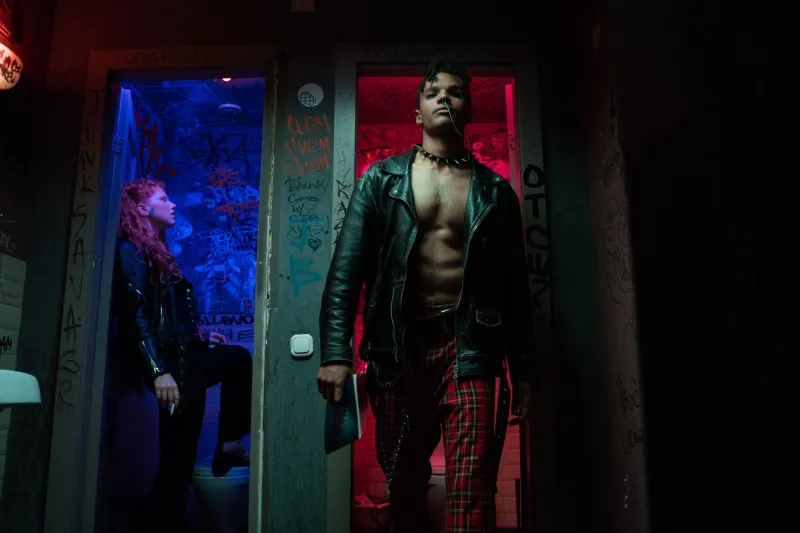
At 1:40am, the queue for the loo is longer than the queue for the cloakroom. Nobody is surprised. The club bathroom has always been a practical pit stop, but in 2026 it has become something closer to a green room with no stage: a place to reset, repair, gossip, cry a little, laugh too loudly and emerge ready for one more hour. The hand dryer is not just a hand dryer. It is a pulpit, a backing track and occasionally the only warm thing in the building.
The queue is a room of its own
Watch a good club loo queue and you will see a social system working. There is the friend holding three coats and a drink they have been told not to bring in. There is the stranger doing the silent scan for loo roll, gum or a hair tie. There is the person at the mirror applying glitter with the focus of a surgeon. The etiquette is unwritten but strict: do not hog the mirror, do not offer unsolicited advice, do ask before you touch someone’s fringe, and if someone says they are fine twice in a row, believe them the first time but keep half an eye out anyway.
In UK venues from a basement in Manchester to a railway arch in Leeds, the loo queue has become a place where the night’s official story and the real one briefly overlap. You came in for a wee and left with a compliment, a plaster, a phone charger and the name of a DJ you absolutely have to see. That is not a design flaw. It is the room doing its quiet work.
Lighting is the whole plot
Venue designers know the bathroom is the most honest lighting in the club. On the dancefloor, red washes and low beams are generous. By the sinks, the light has to do a job: flattering enough that nobody panics, clear enough that nobody leaves with lipstick on their chin. Warm bulbs and soft side lighting are the heroes. Blue-white overheads are the villains. A mirror that makes you look like a Victorian ghost is not a mirror; it is a heckler.
The best club loos understand that people are not just fixing their faces. They are checking in with themselves. A well-placed shelf, a hook that actually holds a bag, a full-length mirror that is not angled like a funhouse trick — these are small pieces of hospitality. They say: we know you are a person in here, not just a queue number. In 2026, that matters more than ever. The night out is expensive, and people remember whether a venue made them feel looked after.
The welfare hub with a hand dryer
Here is the thing nobody puts on the flyer: the club loo is often the first place someone asks for help. Not always in a dramatic way. Sometimes it is a quiet ‘are you okay?’ over the sink. Sometimes it is a stranger holding a cubicle door while someone catches their breath. Sometimes it is an attendant with a tray of mints and a sixth sense for when a chat needs to become a check-in.
The best attendants are not bathroom bouncers. They are front-of-house in the truest sense: pointing people towards water, flagging a spill, keeping an eye on the person who has been at the mirror a bit too long. Clubs that brief their loo staff on welfare, not just tips and towels, are doing something right. It is not a substitute for proper trained welfare teams on the floor, and it should never be used as a loophole for cutting staff. But it is part of the same instinct: the night should hold people, not just pack them in.
This is also where inclusive design earns its keep. Gender-neutral toilet layouts, accessible cubicles that are not doubling as storage, clear signage and enough space for a wheelchair user to turn — these are not box-ticking extras. They are the difference between a room that welcomes people and a room that tolerates them. The club loo is not a universal solution to access problems, but when it is done well it is one of the most democratic spaces in the building. Everyone ends up there eventually.
Etiquette for the cubicle corridor
The hand dryer confessional has one rule: what is said between the sinks stays there. That means no filming, no repeating someone’s teary monologue as a anecdote, and no pretending you did not hear the person in the next cubicle having a full life crisis. You did hear it. You are now part of it. Offer a loo roll under the partition if the situation calls for it.
A few loose principles for a better queue: let the person with the visible emergency go first. Ask before you help. Do not offer a drink to someone who is clearly past the point of needing one. Share the mirror. If you are the one holding court by the hand dryer, keep one ear on the door. And if someone is sitting on the floor and does not want to move, do not make it a spectacle. Ask if they need water, a friend or space. Then give them the space.
The small mercies between the sinks
The club loo will never be the main event. It should not be. But it is where the night gets patched up, where strangers become brief allies, and where the dancefloor’s big feelings find a smaller, kinder room. In 2026, with nights getting longer and tickets getting dearer, those small mercies matter. The hand dryer roars. Someone laughs. Someone else says, ‘you’ve got this.’ Then the door swings open, the bass comes back in, and the night carries on — slightly more human than before.