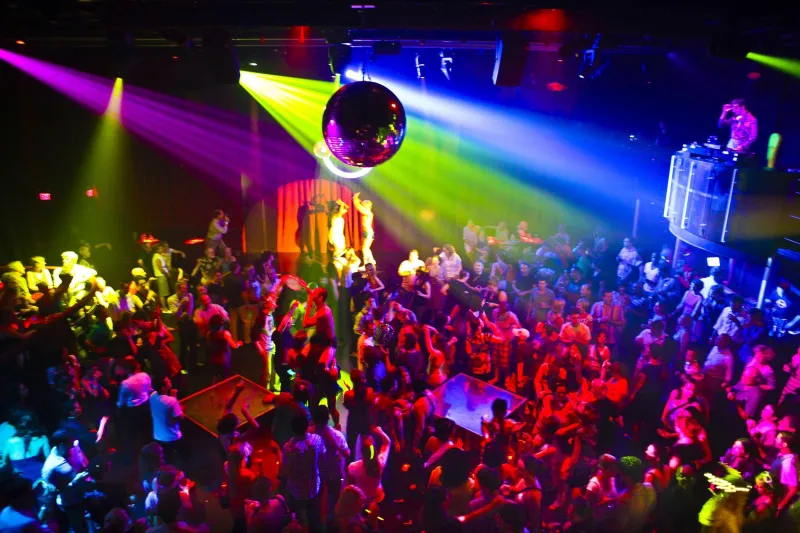
What the Cloakroom Knows: Lost Property and the Secret Life of the British Night Out
Photo: nightclub cloakroom ticket rail coats hanging warm light, via coffeemakerusa.com
It's ten past three in a Glasgow basement and Danielle is holding one roller skate. Size seven, white leather, laces chewed by what she hopes was a dog. It arrived at her cloakroom rail at 1am attached to a man who was extremely confident he'd be back for it. He was not back for it. He is never back for it.
"You get a sixth sense," she says. "Some things are coming back. Some things are already gone. The skate knew."
Danielle has run the cloakroom at a 250-capacity venue off Sauchiehall Street for six years, and in that time her lost property drawer has become something between an archive, a confessional and a very low-budget museum. Every club in Britain has one. Most have two: the drawer they show you and the bin bag under the desk they don't.
The drawer of everything
Ask cloakroom staff what they find and the answers come out like a shopping list written by someone half asleep. Single earrings, always. Phone chargers, always. Inhalers, which nobody ever comes back for and which quietly ruin everyone's evening. A bag of chips, wrapped in a receipt. One unopened jar of olives. A framed photograph of someone's nan. A university hoodie from a city the wearer no longer lives in. And jackets. Dear God, the jackets.
"February is the worst," says Marcus, who works the cloakroom at a Brighton venue a short stumble from the seafront. "Everyone arrives in a big coat, everyone dances like it's August, everyone leaves in a T-shirt, and by Monday I've got a rail that looks like a charity shop's winter section. We hold them for a month. Then they become staff coats, then they become rags, then they become someone else's problem."
There's a rhythm to the seasons. Winter brings scarves, gloves and the odd hat with ears on it. Summer brings sunglasses, flip-flops and — reliably — a towel. Festival season brings wristbands from other events, worn with pride and abandoned without ceremony. Freshers' week brings an entire cohort's worth of brand-new coats bought by parents who assumed their child owned a coat.
But the real social history is in the small stuff.
What the notes say
Because people leave notes. Not intentionally, usually — a scrawl on the back of a ticket, a name and number on a cigarette packet, a shopping list that reveals a life. The best ones get pinned up behind the desk, and over the years they become a kind of accidental anthology of the British night out.
Back in 20 mins x — left at 2am, never seen again.
If found please do not call my mum.
To whoever took my coat: I hope it's cold where you are.
Harry, if you're reading this, I've gone to get chips and I'm not coming back.
"I think people write things down to say them," says Priya, who has worked Soho and Hackney cloakrooms and now runs one in Leeds. "You get a lot of apologies in that drawer. A lot of 'sorry' written on the back of a cloakroom ticket. Sometimes you find one and you think, I hope they worked it out."
The coat that came home
The stories are what keep the job interesting. There's the wedding hat that travelled from a Bristol cloakroom to a wedding in Cardiff and back again via a stranger's car boot. There's the Nokia that was still, miraculously, charged when its owner returned nine months later. And there's the jacket — a very ordinary navy bomber — that turned up three years after the night in question, having apparently lived in the venue's storage cage through two refits and a change of management.
"She stood there and cried a bit," says the Manchester cloakroom attendant who reunited them. "Turns out her dad had given it her and she thought she'd lost it for good. All that time, it was six metres from the dancefloor."
Mostly it isn't like that. Mostly the items go unclaimed, get donated, get binned, and become a footnote in someone's memory of a night they can't quite remember.
So what does it tell us?
Here's the thing the drawers keep hinting at: the way we go out has changed, and the lost property box has noticed before anyone else.
Cloakroom staff across the country report fewer coats and more bags — tote bags, rucksacks, the small practical things people carry now because they're coming from work or going on to work or getting a night bus home at 6am. More chargers, because nobody risks a flat phone now that everything lives on it. Fewer trainers left behind, more comfortable shoes worn in the first place. And a steady rise in items people would once have left without thinking, which reads less like carelessness and more like the opposite: a generation of clubbers who know exactly what things cost.
"People are careful now," says Marcus. "You can tell by the drawer. It used to be chaos in here by closing. Now it's more like a lost and found at a library."
Which isn't to say the romance has gone. A cloakroom is still the only place in Britain where a stranger will hand you your own coat and say "have a good one" like they mean it. It's the last human bit of the night, the bit where somebody looks after your stuff while you lose your mind to a bassline in the room next door.
And the drawer, when you think about it, is just the cost of that: a record of every night that got slightly out of hand. All those forgotten jackets. All those half-finished apologies on the back of a ticket.
Go back for your coat, by the way. Someone's still holding it for you.